Actif Epica 2024: An Adventure Without Snow - Part 1
Part 1: Racing Against Time
Like most people, I try to avoid packing on too many pounds during the winter months. In an ideal world, I’d stay active, embrace the crisp air, and get outside whenever the weather allows. But if I’m being honest, during Covid, I turned into a full-blown couch sloth, bingeing Netflix and living in a cozy cocoon of snacks and sweatpants.

But
let me pause for a moment. I should probably clarify: this isn’t a blog post
about SUPs, training, racing, or even Covid. Honestly, I’m not entirely sure
where this is going—but isn’t that part of the fun? Life rarely follows a
straight path, and sometimes the most interesting stories come from the detours.
So, let’s figure this out together, one twist and turn at a time.
Now
that the pandemic is (mostly) behind us, it feels like the perfect time for a
reset. And if I’m being completely transparent, hitting my 50s has added a
sense of urgency to this desire for change. Yes, I know what you’re
thinking—midlife crisis, right? Maybe. But when you hit 50, you can’t help but
take stock of your life. You realize that more of your days are behind you than
ahead, but that doesn’t mean the best is over. In fact, it might just be the
beginning of something even better.
The
idea of a midlife crisis is largely a social construct, tied to the stages of
life we’ve been taught to expect. While these ‘stages’ might not have any
objective reality, they shape how we see the world and our place in it.
Conventions act as guideposts during times of transition, but here’s the thing:
we get to decide what they mean. The good news? We have the power to rewrite
our story—to redefine who we are and who we want to become. A midlife crisis
doesn’t have to mean impulsive sports car purchases or questionable life
choices. By reframing how we think about aging, we can turn this so-called
crisis into a catalyst for self-discovery and growth.
For
some, hitting 50 is a wake-up call. For others, it’s a focusing lens,
sharpening their priorities and reminding them to make the most of the time
they have left. It’s a natural, inevitable milestone—one that invites
reflection, reevaluation, and, if we let it, reinvention. It’s a chance to
explore new passions, dive into invigorating hobbies, and find deeper personal
fulfillment.
These
thoughts have been percolating in my mind for almost exactly a year, quietly
shaping my perspective and guiding my choices. Now, as I finally put them down
on ‘paper,’ I realize how much they’ve influenced the path I’ve taken. Of
course, there have been countless other developments since then—stories of
growth, challenges, and unexpected turns—but those will have to wait for
another post. This is where I begin: with the reflections that set everything
in motion.
Rediscovering
the Active Epica
Now,
a little about me: I’ve recently taken up standup paddleboard racing, but my
roots are in cycling. I’ve been riding and racing bikes for years, and lately,
I’ve ventured into the world of bikepacking. If you’re not familiar,
bikepacking is essentially off-road bike touring—imagine hiking, but on two
wheels. And here’s where it gets exciting: there are bikepacking races! These
aren’t your typical races, though. They’re self-supported, ultra-distance
challenges where riders might sleep under the stars mid-route. The events can
range from 24-hour ‘sprints’ to epic multiweek adventures. It’s equal parts
grueling and exhilarating, and it’s exactly the kind of challenge that keeps
life interesting.
The
most famous – and most gruelling - of these events is the Tour Divide (TD), “an annual 2,700-mile (4,300 km)
self-supported bikepacking race following the Great Divide Mountain Bike
Route (GDMBR). Most of the route follows dirt and gravel roads with a few
sections of pavement or singletrack sprinkled in for good measure (along with
the occasional hike-a-bike section)”.
I
first discovered the Tour Divide when I stumbled upon the film *Divided* at a local cinema. The documentary
follows Rickie Cotter and Lee Craigie as they ride the Tour Divide, capturing
their awe-inspiring journey from Canada to Mexico. I was instantly hooked. The
idea of bikepacking—carrying everything you need on your bike and racing across
continents—struck a chord deep within me. From that moment on, the dream of
racing the Tour Divide took root and never let go.
Then
came Covid, and with it, a lot of downtime. Stuck at home, I found myself
reflecting on life. With more days behind me than ahead, I started asking
myself: *Why not take some risks? Why not chase a few adventures and truly live
my best life?* Now, as I approach 60, that dream of racing the Tour Divide has
started to feel more urgent. I’ve been thinking, *If I’m going to do this, I’d
better get on with it before I time out.*
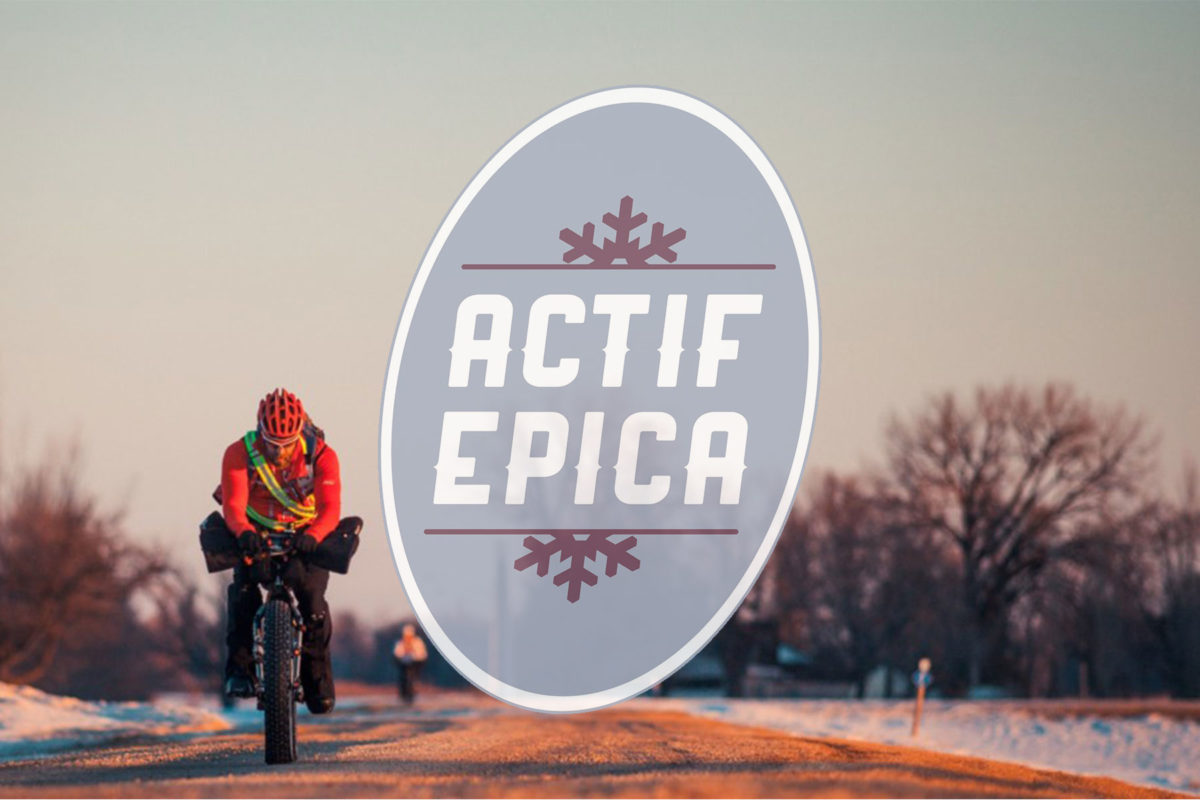
While diving into research about the Tour Divide, I stumbled across another race that had been lingering in the back of my mind: Actif Epica. Described as a “self-supported winter endurance event,” Actif Epica challenges participants to bike or run through icy temperatures, snowy trails, and windswept paths. The event celebrates human resilience and the health benefits of outdoor activity in extreme conditions. It’s the kind of challenge that makes you question your limits—and then push past them.
A
Jumpstart to Action
On
a whim, I sent some information about Actif Epica to a riding buddy, thinking
she might find it intriguing. Her response? “Let’s do it!” I was completely
caught off guard. Suddenly, what had been a vague idea was becoming a very real
plan.
Ride
buddies are the unsung heroes of the ‘bike life,’ and for good reason. Whether
you’re a seasoned cyclist or just dipping your toes into the world of
bikepacking, the shared knowledge and tips exchanged during rides can be a
goldmine. From gear recommendations to hidden trails, ride buddies help you
hone your skills and uncover new adventures. But let’s be honest—companionship
and motivation are the real magic. A few good friends can turn even the most
grueling ride into a memorable experience, making the miles fly by and the
challenges feel less daunting. What might have been a solitary grind becomes a
shared journey, filled with laughter, encouragement, and the kind of
camaraderie that only comes from pushing limits together.
On
a practical level, ride buddies are a lifeline. They provide safety and
support, especially on long or remote routes where a flat tire or mechanical
issue could leave you stranded. They help maintain a steady pace, push each
other to go further, and celebrate every small victory along the way. In the
end, ride buddies don’t just make cycling better—they transform it into a
communal, rewarding, and deeply human experience.
That
unexpected burst of enthusiasm from my ride buddy was the spark I needed.
Sometimes, all it takes is a little nudge from someone who believes in you to
set things in motion. Before I knew it, I was signing up for a winter bike
race—yes, a *winter* bike race! Not exactly the cooking classes or leisurely
travel I’d initially imagined for my midlife adventures. But hey, why not?
If
you’re from a place where winter means sunshine and shorts, the idea of racing
bikes in the snow might sound absurd. But think about it: no one bats an eye at
cross-country skiing, ice skating, or tobogganing in the cold. So why the
surprise when I say that riding and racing bikes on snow-covered trails and
frozen gravel roads is not only possible but exhilarating? Sure, if you’re from
a desert climate, winter might not seem like the ideal time for a bike race.
But trust me, there’s nothing quite like the thrill of speeding through a
frosty landscape when the thermometer plunges below zero. It’s one of the most
exciting ways to embrace the season.

As
someone who lives and breathes bikes—a lifelong winter rider and advocate for
cold-weather cycling—you might wonder why I hadn’t tackled Actif Epica before.
The truth? Self-doubt. That sneaky, insidious voice in my head that
whispers, Can you really do this? It’s a question that can paralyze
even the most passionate among us, holding us back from the very challenges
that could define us.
But
here’s the thing: overcoming that voice is one of the most powerful catalysts
for action. When we silence self-doubt, we unlock the courage to step out of
our comfort zones and chase our goals with unwavering determination.
Challenging those negative thoughts and embracing our potential builds
confidence and resilience. It’s what propels us to take bold steps, whether
it’s starting a new project, pursuing a passion, or finally tackling a
challenge we’ve been avoiding. By quieting that inner critic, we open the door
to possibilities we once thought were out of reach. In the end, overcoming
self-doubt isn’t just about achieving a goal—it’s about transforming dreams
into reality.
And
so, with a mix of determination and trepidation, I took the leap. The moment I
hit “register,” I was overwhelmed by a wave of excitement—and instant regret.
Visions of frostbitten toes and a dwindling digit count flashed through my
mind. But I’ve never been one to sit around waiting for bad news to find me.
Instead, I got straight to work, diving into training and preparing for 50
kilometers of racing in bone-chilling cold. I tackled the essentials: keeping
my hands and feet warm, figuring out food and water, and trying to scrape
together some basic cycling fitness. But the first—and most important—step was
buying the right bike.
Getting
Fat
Enter
the fat bike. Fat bikes (or fat tire bikes, or snow bikes, depending on who you
ask) are essentially mountain bikes on steroids, equipped with ultra-wide,
low-pressure tires designed to roll over sand, snow, and any other unforgiving
terrain. They’re the ultimate winter warriors, built to handle conditions that
would send a regular bike skidding into a snowbank. So, after much
consideration and research, I ordered one. After all, if I was going to survive
50 kilometers of mind-numbing cold, I needed the right tool for the job.

But
timing, as they say, is everything. As it would happen, I finally mustered the
courage to take on a winter bike race, during a pandemic. I can tell you that
it didn’t just disrupt the bike industry’s supply chain; it brought it to a
grinding halt. Suddenly, bikes and parts became as scarce as gold. During those
endless lockdown days, everyone seemed to crave the same thing: outdoor
adventures, fresh air, and an escape from the monotony. Bikes became the
ultimate symbol of freedom, but as demand soared, they vanished from shelves
almost overnight. Spare parts turned into mythical treasures, and bike shops,
once vibrant hubs of activity, were left with empty aisles and dwindling sales.
It was a two-wheeled apocalypse, and we were all just trying to navigate the
chaos.

But
here’s where things got tricky. I knew full well that I was stepping into the
chaos of the bike industry’s parts supply breakdown. Knowing about it and
living through it, however, are two very different things. The pandemic had
thrown global supply chains into disarray, and the bike industry was hit hard.
Frames, tires, drivetrains, and wheelsets—everything was either backordered,
sold out, or stuck on a cargo ship somewhere in the Pacific. What should have
been a simple purchase turned into an all-consuming scavenger hunt. I scoured
online retailers, called every local shop within a 100-kilometer radius, and
even joined a few forums to track down the components I needed. It felt like
trying to assemble a puzzle with half the pieces missing—and no picture on the
box to guide me.
The
delays were frustrating, but they also gave me a newfound appreciation for the
complexity of the bike industry. From manufacturing bottlenecks to shipping
delays, every link in the chain was under strain. And yet, despite the
challenges, the cycling community rallied. Shop owners went out of their way to
source parts, fellow riders shared tips on where to find inventory, and
somehow, piece by piece, my fat bike started to come together. Well, almost.
There
was just one problem: the wheelset never arrived.
I’d
ordered it months in advance, tracking its progress (or lack thereof) with the
kind of obsessive attention usually reserved for watching the weather before a
big race. But as the race date loomed closer, it became clear that my wheelset
was lost in the void—somewhere between a factory in Taiwan and a warehouse in
who-knows-where. It was the final, maddening twist in a saga that had already
tested my patience.
But
that’s part of the experience, isn’t it? Bike racing isn’t just about training
and performance; it’s also about navigating the unexpected challenges that come
up along the way. And this story isn’t over yet. There’s more to share—about
the race itself, whether the wheels finally arrived, and what I learned from it
all.
So, stay tuned for the next installment, where I’ll pick up where this left off. Until then, keep riding, keep pushing, and remember that every race has its own story.


Comments
Post a Comment